















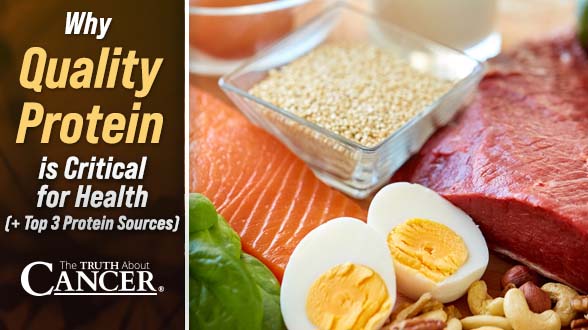
There’s plenty of debate these days about protein and how much people need to stay healthy. On the one hand, high-protein, low-carbohydrate diets like “Paleo” are wildly popular because many people are losing unwanted weight and feeling better by sticking to them. On the other hand, protein sometimes gets a bad rap for being hard on the kidneys, which is why some people say it should be avoided in large amounts. Making heads or tails of all the conflicting information out there about protein can be overwhelming. Let’s take a look at why your body needs protein and some of the best sources available.
A good rule of thumb is to remember that protein is an essential nutrient every cell in your body needs to function properly. Without protein, you wouldn’t have any muscle mass, for one. Your neurological system would also collapse, as it relies on protein to facilitate the transfer of information between your spinal cord, brain, and the various other organs and cellular systems that make up your body.
Protein also facilitates the proper function of your digestive tract, which is where your body gets the nutrients it needs to live. It’s also used by your endocrine system, which produces vital hormones that regulate your immune, reproductive, and central nervous systems.
Are You Getting Enough Protein in Your Diet?
Since protein is absolutely essential for practically every process that takes place inside your body, it’s obviously something that you should embrace rather than avoid. It’s certainly possible to consume too much protein, so be sure to keep your diet balanced. This is especially true for active individuals who expend a lot of energy and regularly work their muscles, as well as those who suffer from blood sugar issues.
Recognizing that protein is critical for human survival and that you may not be getting enough of it, it’s essential to also remember that quality protein is what will confer the most health benefits. But what exactly is a quality protein, and what are some of the best sources of protein?
The best sources of protein are those that contain all (or most) of the essential amino acids that your body needs to sustain its growth, repair, and composition. This means not only in your muscles, but also in your bones, organs, cells, and even gut flora.
Essential Amino Acids
“Essential” amino acids are diet-based amino acids that the body is unable to produce on its own from other nutrients.
The nine amino acids that are generally recognized as essential, and which are part of the 22 essential and non-essential amino acids in total that science has thus far identified, include histidine, isoleucine, leucine, lysine, methionine, phenylalanine, threonine, tryptophan, and valine.1 Arginine is sometimes considered to be essential as well because, even though the body is capable of producing it, some people’s bodies don’t produce enough of it. Tyrosine is another amino acid that becomes essential when the body is deficient in phenylalanine.2
There’s also selenocysteine and pyrrolysine, two rare amino acids that science didn’t even know existed until fairly recently.3 Selenocysteine is a selenium-based signaling amino acid that tells the other amino acids when to stop growing, thus allowing them to turn into protein and nourish the body,4 while pyrrolysine functions similarly to lysine as a building block to create proteins.5
3 of the Best Sources of Protein
Here are a few great examples of foods rich in high-quality protein that provide your body with the essential amino acids.
1. Grass-Fed Meat, Pastured Eggs, and Wild-Caught Fish
When it comes to obtaining the full spectrum of essential amino acids, almost nothing beats protein derived from animals raised in their native habitats. Meat from livestock and poultry that forage on pesticide-free grass and bugs, eggs from chickens that roam chemical-free pastures, and fish caught in the wild are all excellent sources of “complete” protein. These protein sources contain many or all of the essential amino acids, as well as non-essential amino acids and other vital vitamins and minerals.
Both of the rare amino acids mentioned above − selenocysteine and pyrrolysine − are either present or able to be synthesized from the amino acids found in grass-fed, wild, and pastured meat and eggs.
The reason I emphasize grass-fed, wild, and pastured meat and eggs is that animals raised in these environments are generally healthier. Cows, for instance, are ruminant creatures that were designed to eat grass, not corn and soybeans as is commonly fed to them. The same goes for chickens that feed on bugs and other things they find in grass as opposed to grains, which are often genetically modified and sprayed with toxic chemicals. When animals eat what they were created to eat and live in open-air environments, they produce meat and eggs that are richer in the vital nutrients that your body needs.6
2. Superfood Seeds
If you’re not a meat-eater or want to avoid animal products altogether, vegetarian/vegan options that are considered complete proteins include seeds and nuts. Some seeds and nuts are better than others, of course, and my recommendation is to seek out superfood varieties that stand out for their diverse amino acid profiles. Two solid contenders in the seed category are chia (Salvia hispanica) and hemp (Cannabis sativa), both of which contain all of the essential amino acids.
>>Check out this delicious cacao chia pudding recipe from Charlene’s Kitchen<<
Besides containing a treasure trove of dietary fiber, trace minerals, and omega-3 fatty acids, chia seeds are made up of 20% complete protein, making them an excellent alternative to meat. Chia seeds are so nutritious, in fact, that ancient Aztec warriors are said to have relied on them for strength during battle, needing only a single spoonful to sustain them for 24 hours.7 Hemp seeds are similarly nutritious; the shelled varieties of which contain 11 grams of complete protein per 30-gram serving.8
3. Bone Broth: One of the Most Nutritionally-Dense Sources of Clean Protein on the Planet
If you’ve ever made chicken soup at home and noticed that, after being refrigerated, the broth turns gelatin-like, what you’re seeing is protein extracted from the chicken bones and infused into the liquid. This gelatinous substance is commonly referred to as bone broth because it’s made from chicken bones and everything they contain, including protein and the full spectrum of essential and non-essential amino acids.
Bone broth is often referred to as “nature’s multivitamin” because it’s one of the most nutritious superfoods on the planet. Making bone broth yourself is relatively easy: boil bones in a large pot of water, then add vegetables and spices for seasoning. However, in today’s time-crunched society, finding the time to watch the pot can be a challenge in itself.
The good news is that bone broth is now sold both in cartons and as a powdered protein supplement, which is especially convenient for busy and active folks who want the benefits of bone broth without the hassle of making it. Bone broth protein powder, if prepared correctly, contains all the same nutrients as liquid bone broth. This includes glycosaminoglycans (GAGs), glucosamine, hyaluronic acid, and chondroitin sulfate, all of which have been shown to support collagen and elastin production, joint and ligament strength, cellular rejuvenation, and skin health.9
Beyond its protein content and the aforementioned nutrients, bone broth is rich in a number of other synergistic healing compounds that show incredible promise in other areas of health. A few examples include its reported ability to help heal the gut and boost the immune system. Some people have even been able to overcome food intolerances and allergies by including bone broth in their diet, which is why this powerful superfood is gaining so much attention these days.
One of the reasons why bone broth is superior to many other forms of protein is that it’s remarkably easy to digest. The gelatin it contains “gets along” really well with intestinal flora. This facilitates the assimilation of its many nutrient cofactors, all of which play a specific role in health maintenance and disease prevention.10
Editor’s Note: This article was initially published in 2022 and has been updated in 2026.
Article Summary
Protein is an essential nutrient that every cell inside your body needs in order to function properly.
The best sources of protein are those that contain all (or most) of the essential amino acids that your body needs.
3 of the Best Sources of Protein:
- Grass-Fed Meat, Pastured Eggs, and Wild-Caught Fish
- Superfood Seeds
- Bone Broth








You are missing the most important fact about protein! The body can make the proteins that it needs if it has all the essential amino acids and then can even break down proteins to rebuild other proteins. All the amino acids are what it important to consume, not protein! Do the research.
Since I live alone in the house, I do not bother making bone broth because I do not know what I am going to do with all this meat and bones and broth. I love homemade bone broth to store bought because it contains far less salt. I have not been able to make many of those foods since my father died because of the quantity.
Why don’t you mention beans, lentils and chick peas? Surely they don’t contain all the essential amino acids, but when you eat them with grains (which contain the missing AA) you will get the complete protein that the body needs. No need to eat cows or poultry!
Vegetarians in many ancient cultures knew how to get enough protein on a vegetarian diet:
The Japanees combined rice with soy beans
In India they combined rice with lentils or chick peas
In South America the natives combined corn with red mexican beans.
And they still do today….