















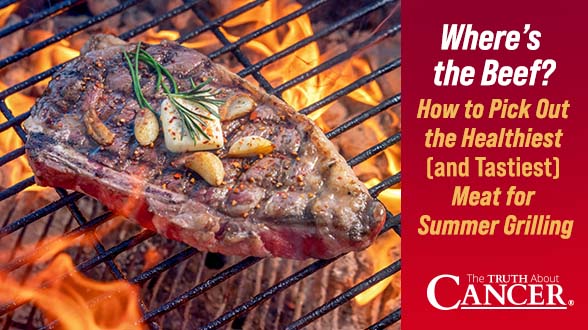
Today is July 4th, so we wanted to wish you “Happy Independence Day!” Millions of Americans are getting ready to have a summer cookout. So how can you enjoy those tasty baby backs and burgers while staying health-conscious? It all comes down to the types of meats you choose. Commercial, organic, grass-fed, pasture-raised, non-GMO, locally-raised…Making the best selection for you and your family can be downright confusing!
We’re here to give you the low-down on the types of beef you want to stay away from, as well as all the information you need to choose the healthiest and best-tasting cuts for your summer grilling!
The Problem with Commercial Beef
According to the North American Meat Institute, the United States cattle industry produced 25.95 billion pounds of beef in 2017 alone. Most of these cattle were raised on commercial feed and processed using commercial methods.
What does this mean in terms of the food that will eventually wind up at the dinner table?
The FDA (Food and Drug Administration) and the USDA ( United States Department of Agriculture) are the two primary government agencies responsible for regulating food in the USA. The USDA, in particular, is the primary body responsible for inspecting all meats, including beef. The USDA’s Food Safety and Inspection Service (FSIS) has 8,000 inspectors who ensure “safety, wholesomeness, and accurate labeling” across the country. This includes in feedlots, during slaughter, processing, and packaging.
When it comes to commercial meat, these regulatory agencies basically exist to make sure that what comes out of commercial feedlots and meat processing plants doesn’t make you sick right away when you eat it. How any one of the over 6,000 commercial cattle and beef operations in the United States accomplishes this (as well as how their products affect people in the long run) is another story.
Antibiotic Overuse
Commercial cows will spend the majority of their lives corralled into large, confined feedlots, or CAFOs (Concentrated Animal Feeding Operations), which may contain thousands of animals in a single area. Whenever you have that many living beings in such close quarters, all kinds of pathogenic critters are bound to proliferate.
The commercial beef industry’s answer to this is antibiotics. According to a 2013 report, in part conducted by the FDA, roughly 80% of cattle raised for commercial beef were given some form of antibiotic at some point in their short lives. Commonly used antibiotics include penicillin, tetracycline, ceftiofur, florfenicol, tilmicosin, enrofloxacin, and tulathromycin.
Antibiotics are often given from the very beginning of an animal’s life as a “preventative.” Animals are also given “subtherapeutic” doses of antibiotics to induce weight gain, especially towards the end of their lives. Administering antibiotics for this reason is currently illegal in the EU and Canada, but is still practiced in the U.S.
Nevertheless, the prevalence of foodborne pathogens in commercial meat remains astonishing. A 2011 study published in the medical journal Clinical Infectious Diseases found that slightly more than half of all the commercial meat samples taken from grocery stores in Chicago, Fort Lauderdale, Los Angeles, Washington, D.C. and Flagstaff, Arizona contained some kind of antibiotic-resistant bacteria, also called “superbugs.”
A total of 47% of the samples contained Staphylococcus aureus. Fifty-two percent of those contained bacteria that was resistant to at least three different types of antibiotics. Similarly, an Environmental Working Group (EWG) study analyzed 47,000 federal government lab tests and found that 55% of the beef tested positive for campylobacter and Salmonella.
rBHT Bovine Hormones
Another pharmaceutical commonly used in commercial meat is Recombinant Bovine Hormone Therapy (rBHT). rBHT is given to dairy cows to increase milk production, but it is also given to steers to shorten the time to slaughter. The majority of commercial beef cattle in the U.S. are given this growth hormone or a similar one.
A study conducted at Columbia University in 2013 found that “[d]airy and meat consumption may impact breast cancer risk through modification of hormones (e.g., estrogen), through specific nutrients (e.g., vitamin D), or through products formed in processing/cooking (e.g., heterocyclic amines).”
While rBHT still remains legal in the U.S., it is banned in Japan, Canada, Australia, and the EU. The EU also bans the import of beef from steers that have been given rBHT.
GMO Corn (and Other Goodies) In Commercial Feeds
Finally, there is the question of the feed that is given to commercial livestock. Confined beef cattle are fed some grasses and legumes like alfalfa, but mostly they are sustained by grain feeds that contain a large percentage of genetically-modified (GMO) corn.
This corn itself is subject to mold, which then ends up in the feed, making cows sick. There is also evidence that GMO corn ingested by cattle eventually becomes GMO meat. A detailed report on GMO Truths and Myths put together by the nonprofit consumer organization Open Source Earth highlighted several studies which found genetically modified DNA in animal organs. The samples included meats from both bovines and fish that were fed GMO feed.
In addition, it is important to mention that corn is not a bovine’s natural food source. They typically feed on grasses that are growing directly in the ground. These include bluegrass, ryegrass, bermudagrass, fescue, Timothy grass, foxtail, sorghum, bromegrass, orchardgrass, quackgrass, and canarygrass. They also eat other plant and fiber sources, such as alfalfa, vetch, sainfoin, birdsfoot trefoil, red, white, and crimson clover, as well as other plants that may be native to their region. Corn feeds (even without the GMO factor) can seriously diminish the quality and nutritional value of meat.
To cut corners when corn feed prices are high, some feedlot operators have also been known to give cattle other questionable substances besides corn, such as candy or even other animal parts, which are mixed into the feed.
Finally, there is another sad fact regarding CAFO-raised beef cattle. The majority of CAFO cows typically live miserable, stressed-out lives, and die in a similarly horrific way. Supporting this industry not only enables the continued abuse and torture of these poor animals, but it also raises another important question. Can humans be negatively affected by eating the meat of an animal that lived and subsequently died with severely heightened stress hormones pulsing through its veins? The idea definitely makes one pause.
Humans have been eating animal protein for thousands of years. While some individuals function better by going vegan or vegetarian, many others feel better physically and mentally if a small amount of meat is included in their diet. This may be due to body type, blood type, heredity, metabolism, or a whole host of other factors. Still others (like yours truly) just like the taste of a good barbecue every once in a while—and that’s okay too!
USDA Organic Label May Not Mean What You Think It Does
If you are going to eat meat, make sure it is the right kind of meat!
Take a minute and think about how you choose the meat that you eat. If you are like most health-conscious yet super-busy folks, when you go to the grocery store, you likely scan the packages for that little green-and-white label that says “USDA Organic.”
But what does that mean, exactly?
USDA Organic beef must adhere to certain US Department of Agriculture regulations. According to the USDA website, in order to get that “USDA Organic” stamp on a meat package label, livestock must be:
- “Produced without genetic engineering, ionizing radiation, or sewage sludge,”
- “Managed in a manner that conserves natural resources and biodiversity,”
- “[M]anaged organically from the last third of gestation…,”
- “Allowed year-round access to the outdoors except under specific conditions (e.g., inclement weather),”
- “Raised on certified organic land meeting all organic crop production standards,” and
- “Raised per animal health and welfare standards.”
This all seems like a step in the right direction, and in general it is! Organic meat that adheres to the above USDA guidelines in a conscientious way will contain significantly less antibiotic-resistant “superbugs” and will also be devoid of hormonal substances that may lead to cancer.
The problem is that these regulations can often be nebulous and vague. This leaves them open to loose interpretation by unscrupulous “organic” cattle operations that put profit before people (and animals).
For example, the verbiage regarding confinement says that animals must be “allowed year-round access to the outdoors.” That could simply mean an open door somewhere in a packed-to-the-gills animal warehouse. Organic beef can also come from cattle fed only grain, which is okay with the USDA as long as it is organic. The USDA Organic beef label also allows the use of vaccines and certain pharmaceutical medications, such as those for pain or deworming.
Conversely, many “USDA Organic” beef producers are on the up and up and will raise their cows on certified organic land with minimal or no grain feeding. They will also be mindful of the pros and cons of approved medications and vaccines and use them sparingly.
The important thing to keep in mind is that just because you see “USDA Organic” on a meat package doesn’t mean that the brand you are buying is completely devoid of contaminants and comes from happy cows who grazed on grass their whole lives. It’s up to you to do your homework about the “USDA Organic” beef brand you are considering before you buy.
“Grass-Fed” Beef: Sometimes It’s Not What You Think
Grass-fed describes meat that comes from cows who have grazed freely on various kinds of in-ground pasture grass and have not been confined in any way (except for their own safety in inclement weather).
First of all, “grass-fed” is very different from “pasture-raised.” The term “pasture-raised,” similar to “free range” for poultry, just means that the animal was able to spend some unspecified amount of time roaming around outside. The term “grass-fed,” on the other hand, means that a cow has spent its entire life outside and has gained all of its nutrients from the grasses that it has eaten, not from grain feeds.
Likewise, just because a package says “grass-fed” does not mean that it is devoid of hormones and antibiotics. Grass-fed cows can also graze on pastures that have been sprayed with pesticides. Those chemicals will eventually make their way into the meat you consume.
There are no federal regulations for “grass-fed” beef, unlike those for “USDA Organic.” There are, however, legitimate associations that issue certifications as “seals of approval” for quality. One such organization is the American Grassfed Association, which offers verification for producers who raise cattle on grass pasture only, and never give antibiotics or hormones. Another organization is PCO Certified Organic, which offers the OPT (Organic Plus Trust) Grass-Fed Organic certification. Operations that are OPT certified are certified organic and 100% grass-fed.
Grass-Fed Done Right: Better for You and the Cow
When grass-fed is done right, the benefits for human nutrition, the environment, the cows themselves, and taste are extraordinary.
Many ‘aware’ ranchers put into place a “regenerative grazing system” for their cattle, which is a way of rotating munching cows and their offspring in different pastures. This makes it easier on the environment. It can also restore soil health and provide cows with a healthy, diverse diet.
Grass-fed cows will yield meat that has more overall nutrients. It is leaner (lower in fat) and has fewer calories than commercial feedlot beef. In addition, it has more vitamins, minerals, and essential fatty acids.
According to a 2010 study conducted at California State University, Chico, College of Agriculture, meat that comes from grass-fed cattle will contain up to three times the CLA (conjugated linoleic acid) level than cows fed grains. CLAs have been associated with lowering risks for cardiovascular disease. The study also found that grass-fed beef has higher levels of omega-3 and omega-6 fatty acids and higher antioxidant levels, including vitamins A and E. It is also a great source of B vitamins and essential minerals.
Besides being leaner and more nutritious, grass-fed beef has a stronger, juicier taste. You will also find that the taste may vary from farm to farm. What the cows in one area eat will be slightly different than what cows in another area eat, and that will be reflected slightly in the meat they produce.
Consider Local Beef: Here’s Why
Buying locally means you are getting animal protein from a rancher who lives within roughly 100 miles of you. You will know that the meat has not had to travel far before it reaches your local grocer.
Being close gives you the option to visit the facility if you want to learn more about their operations and practices. Most local grass-fed beef producers are small family farm operations. Family farms are the backbone of our country. Many of them have been around for generations.
Finally, most local cattle operations give you the option of buying a section or an entire carcass. Consider connecting with family and friends in your area, or putting the word out to your neighborhood to band together to purchase beef in bulk. You may find this quite economical as well.
Do Some Grass-Fed Grilling This Summer!
Beef labeled “grass-fed, certified organic, hormone and antibiotic-free” is the meat I absolutely recommend for your next grilling experience. The Weston Price Foundation, a decades-old resource for traditional whole foods cooking, has some great guidelines (and some amazing recipes) for working with the unique savory qualities of grass-fed beef.
Grilling outdoors can be a great chance to get together and “break bread” with others. Make sure it is a healthy experience by not charring your meat. Burnt meat can produce HCAs (heterocyclic amines) and PAHs (Polycyclic aromatic hydrocarbons), which are known carcinogens.
Do your health and your taste buds a favor and choose grass-fed, organic, local beef for your grilling experience this summer. You will be supporting your health, the environment, and your local farm. With grass-fed beef, you will have a 4th of July feast that just can’t be beat!
Editor’s Note: This article was initially published in 2022 and has been updated in 2026.







I would not believe what the label says. Even if it might be grass fed, USDA certified organic, and free of antibiotics does not mean that it is. They could still be exposed to pesticides and herbicides. Barbecuing and charring meat can be unhealthy too. I eat very little meat because my cholesterol is very high and I have to take statins for it.