















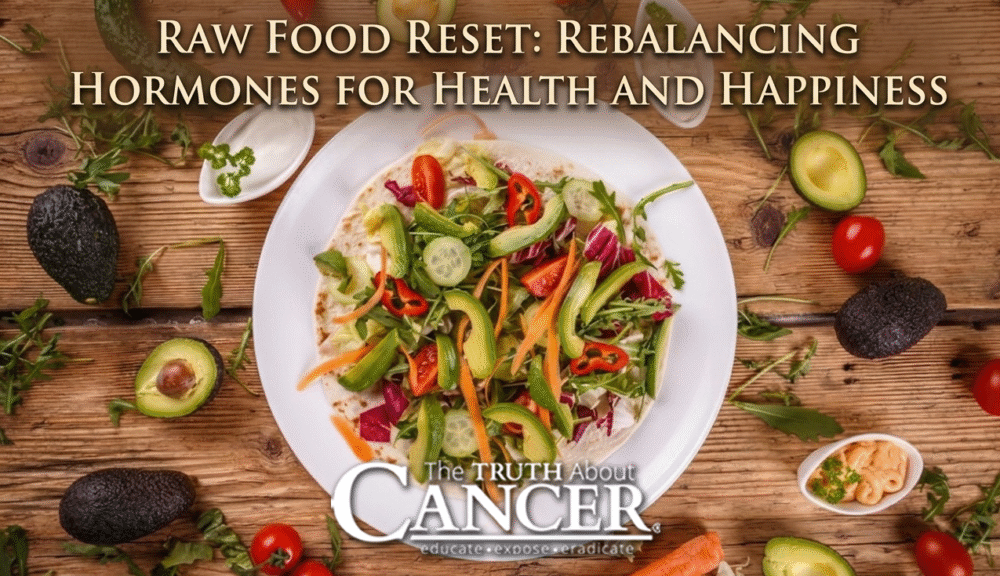
When it comes to the best way of eating for health, everyone is unique. However, for many people, “going raw” has been the approach that has yielded the most rewards in terms of overall health benefits. If you are considering eating more raw foods or trying a total raw foods diet, you might want to consider how it will affect your hormonal balance. Read on to learn how “going raw” can affect your hormones, as well as some great benefits and cautionary considerations.
What is a Raw Food Diet?
First of all, let’s take a look at what it means to “go raw.” Eating raw means consuming food that is organic, unprocessed, and uncooked. As a technical note, a food is considered raw when it has not been heated past 118℉.
Contrary to popular belief, a raw food meal can be just as delicious and satisfying as a cooked meal, and it’s super nutrient-dense. These days, the cookbook section of your local bookstore (as well as online) is chock full of creative dishes that can be made raw and served up to the satisfaction of even the pickiest eaters!
Raw food dishes are created in large part by blending, sprouting, juicing, dehydrating, and presenting foods often in their simplest forms. Surprisingly, you don’t have to stay away from meat and dairy to be a “raw foodist.” Some raw foodists also eat raw meat and dairy. Examples of this would be sashimi (fish, such as tuna, that is lightly seared on the outside but still raw on the inside), raw eggs, or raw goat’s milk.
Raw foodists who also eat meat and dairy in this way have the advantage of not having to worry about getting adequate protein and healthy fat in their diet (we will talk more about this later on in the article). On the other hand, raw foodists who eat animal products in their raw form have the added responsibility of taking extra precautions.
For obvious reasons, they have to make sure that the foods that they consume come from pure sources and have not been contaminated in any way. Although some people decide to keep raw meats and dairy in their diet, the majority of raw foodists are vegan as well. This is known as raw veganism.
5 Reasons to Try a Raw Food Diet
1 | Raw Foods Leave Out the Junk
Perhaps the biggest advantage of “going raw” is what you get to leave out of your diet in the process. Preservative-laden processed foods are out when a person eats raw, and so are most sources of processed sugar and mock sugar substitutes, such as high-fructose corn syrup and aspartame. Even if you eat animal products, going raw means you are conscious of the source and quality of your food.
If you are going raw, you will also leave out most pesticide-laden fruits and vegetables. You will need to stay away from GMOs, non-organic vegetables and fruits, and, most importantly, commercial meats and dairy.
So, how does what you leave out of your diet affect your hormones?
First of all, let’s take a look at exactly what hormones are and what they do. The endocrine system, also called the hormonal system, is a network of chemical messengers that communicates throughout the body, keeping organs functioning and repair processes healthy. Any kind of synthetic substances, such as preservatives, pesticides, or added hormones, consumed regularly are going to disturb and maybe even disrupt this flow of communication.
Additives such as the ones listed above are major sources of xenoestrogens, i.e., chemicals that mimic the aggressive forms of naturally occurring estrogen. They are also sources of heavy metal and halide toxicity, bacterial pathogens, and other harmful toxins. All of these substances can and will throw hormone levels off if consumed regularly. In women, chemically induced hormonal imbalance can lead to reproductive issues such as PMS, endometriosis, and reproductive cancers, as well as adrenal fatigue, thyroid issues, and imbalances in brain function and the H-P-A axis. In men, hormonal imbalance can affect testosterone balance, prostate health, muscle strength (repair and function), and much more.
Going raw means choosing to eliminate harmful chemicals found in processed and commercial foods. In doing so, you are taking a major step towards repairing and rebalancing hormonal systems that may have been skewed by these substances.
Also, remember that hormonal balance is not just a “woman’s problem,” and it is not all about estrogen either. High cortisol and adrenaline spikes caused by reactions to chemical-laden foods can also trigger inflammation, cause imbalances in histamine, throw off insulin levels, and lead to a cascade of other health issues in all individuals, no matter what age or gender.
For example, a Swiss study conducted in 2011 found that when children drank raw, organic cow’s milk rather than regular commercial milk, they experienced fewer cases of childhood hay fever and asthma. In fact, the researchers observed a protective effect against asthma in rural European farm children who regularly drank raw cow’s milk.
2 | Keeping It Raw Helps Maintain Nutritional Integrity
Besides what is not included in a raw foods diet, there are also the benefits of those healthy raw foods that are included. In general, vegetables and fruits tend to have more bioavailable nutrients in their raw form. This has a lot to do with enzyme content, which we will discuss in the next section.
However, bioavailability also depends on the phytonutrients themselves, which are found in high amounts in unprocessed and uncooked vegetables and fruits. A good example of this is raw broccoli versus cooked broccoli. One of the key phytonutrients in this vegetable (and, in fact, in all cruciferous veggies) is sulforaphane. Sulforaphane is a major cancer protector, anti-inflammatory, and brain cell protector. A 2008 study conducted in the Netherlands found that eating raw broccoli can result in faster absorption of sulforaphane and higher bioavailability in general for this powerful antioxidant and phytonutrient (when compared to cooked broccoli).
Another European study found that those who ate a raw vegan diet had higher concentrations of key vitamins in their blood compared to those who ate a regular, cooked-food omnivore diet. Some of the substances that the researchers noted in particular, which were significantly higher in the blood work of raw vegans, were vitamin C, vitamin E, and beta-carotene.
So, how do added nutrients like the ones above help your hormones? Many of the benefits relate to detoxification. Putting fiber content aside (which we will discuss later), each of these nutrients helps remove excess estrogen, cortisol, and other hormonal substances from the body. Beta-carotene, found in high amounts in bright red and orange whole foods such as carrots, cantaloupe, and winter squash, as well as leafy greens like spinach, is a powerful antioxidant that supports the liver and can protect against cellular mutations. Vitamins C and E play direct roles in hormonal communication.
For example, did you know that, after absorption, the highest concentrations of vitamin C are actually found in neuroendocrine tissues and in the brain? Vitamin C also plays a pivotal role in central nervous system function.
Vitamin E has been shown to be cancer-protective against breast cancer. This is because it is a powerful antioxidant, amongst other factors. In addition, vitamin E can be a fertility booster and balancer, according to studies that go back to the 1930s. It has some progesterone-like as well as estrogenic and androgenic properties that can “act in synergy with both ovarian hormones and testosterone,” according to a 1972 study. Some raw foods that are high in vitamin E include avocados, spinach, mangos, and many kinds of nuts and seeds, including pumpkin seeds and almonds.
3 | Eating Raw Food Keeps Enzymes Intact
Perhaps the biggest benefit of a raw foods diet are their enzymes. Basically, when you cook food over 118 degrees F, most of the enzymes that would normally exist in the raw version of the veggie or fruit are completely destroyed. Eating a raw food diet keeps these enzymes intact. The key reason raw foods are so bioavailable is the enzymes. In fact, enzymes play such an important role in the absorbability of food that many people decide to “go raw” based on the enzyme factor alone.
Why are enzymes so important? First of all, enzymes are vital for breaking down the food we consume. Some examples of enzymes that are key in this process are glucoamylase and amylase, which are key in the absorption of carbohydrates. Bromelain (found in tropical fruit such as pineapple, as well as kiwi, ginger, asparagus, and others) is needed for the breakdown of proteins, while lipase is key for the breakdown of fats. Finally, an enzyme called alpha-galactosidase plays a major role in converting sugars into natural glucose needed for sustained energy.
One of the forerunners of the raw foods movement was Dr. Edward Howell. He promoted this diet primarily because of the digestive benefits of eating whole foods with enzymes intact. In fact, Dr. Howell believed that eating raw food helps to maintain the “life force” within the food. According to him and other raw-food advocates, when you eat “life force,” you strengthen and balance your own life force, including hormonally.
4 | Eating Raw Helps Your Gut
Recent research has shown that eating a raw diet can significantly alter the gut microbiome. One of the most significant studies in this regard was conducted in 2014 by researchers at the CUNY School of Public Health in New York City. They found that the gut microbiota composition of individuals who had been on a vegan diet for 6 months differed greatly from that of omnivores. According to the study report published in the journal Nutrients, vegans had more protective bacteria than pathogenic species in the gut, as well as reduced levels of inflammation in the digestive tract and overall.
This is great news for your body, in general, and for your hormones in particular. The connection concerns the link between hormone production and the digestive system. When it comes to the endocrine system, the thyroid is definitely the “main boss,” but other organs also play major roles in maintaining hormonal communication. Many of these major players are located in the gut.
In fact, the pancreas, the liver, and the intestinal tract itself all play pivotal roles in hormonal production. The gut actually contains its own nervous system and produces neurotransmitters and hormones inside the microbiome. One example of an essential hormone produced in part in the gut is melatonin.
In addition, the types of bacteria that exist in your digestive tract play a role in how much of a hormone is produced as well as how that hormone is expressed in your body. For example, when melatonin is produced, certain bacteria and bacterial genetic codings play a role in determining where that hormone goes and what it does for the sleep cycle, reproductive health, and more.
Another example can be seen with estrogen. The estrobolome is defined as ‘the aggregate of enteric bacterial genes whose products are capable of metabolizing estrogens.” In other words, there is a whole community of bacteria whose job is to make sure that estrogen is produced and goes where it needs to go for your health!
5 | Raw Foods Add Extra Fiber to Your Diet
It may go without saying that the majority of the foods in a raw diet will consist of vegetables, nuts, fruits, and seeds. This is true for most individuals, even if they are still eating meat and dairy. All of these types of foods can provide a variety of different benefits, as we’ve described. They also all have one thing in common – they’re all great sources of fiber! And did you know that getting enough of both soluble and insoluble fiber can actually help with hormone balance?
The first reason, again, concerns the digestion and absorption of food. The body needs a variety of fiber types in order to do this. Some whole raw foods contain soluble fiber, some contain insoluble fiber, and many raw foods contain a little bit of both. As we shall see, both soluble and insoluble fiber is essential for healthy gut balance, for proper elimination, and for the health of the body as a whole.
A 2017 study conducted at the University of Georgia found that increasing fiber intake can improve hormonal health indirectly by aiding weight loss and directly by strengthening the colon’s integrity, flexibility, and function. On the other hand, the study also found that those who ate foods that contained added sugars (such as processed foods) in childhood had hormonal imbalances and other complications due to changes in the gut microbiome.
Consuming certain foods rich in soluble fiber can be extremely beneficial for maintaining the integrity of the gut microbiome and keeping a healthy metabolism. Soluble fiber is important because it slows digestion, helping your body gently absorb the sugars from raw foods. Soluble fiber also helps keep cholesterol levels stable by binding to fatty acids and allowing them to be excreted from the body.
One particular soluble fiber of note is inulin. Inulin is especially important for hormonal balance because it is considered a “prebiotic” that nourishes certain gut bacteria that help regulate estrogen and other hormones. Some raw foods that contain high amounts of inulin are bananas, asparagus, dandelion, leeks, and garlic.
Insoluble fiber is just as important for hormone health because of the role it plays in detoxification. Insoluble fiber does not dissolve in water, so it can assist the body to stay hydrated. It also plays a key role in moving waste through the intestines, including excess xenoestrogens (mentioned above). Some experts refer to insoluble fiber as a “toothbrush” for your gut. It helps move things through and out, as well as “scrub out” the inner lining of the digestive tract. Because of this, it helps prevent constipation and encourages regular bowel movements.
Some raw food sources of insoluble fiber also contain antibacterial qualities that can keep pathogenic bacteria at bay. One example of a raw veg that contains large amounts of insoluble fiber and is also an antimicrobial is the plain old carrot!
According to a French study, raw shredded carrots contain enough antibacterial content to “inhibit spoilage bacteria.” Eating an adequate amount of raw carrots has also been linked to reduced intestinal inflammation. Remember that lower inflammation means less cortisol and more healing hormones, benefiting your whole system.
Conclusion
The choice to embrace a raw food diet represents a compelling path towards achieving and maintaining hormonal balance, backed by numerous benefits that extend far beyond dietary preferences. By opting for raw foods, individuals prioritize avoiding harmful substances that often creep into processed and commercial foods, safeguarding their hormonal systems from disruptions caused by synthetic additives, pesticides, and toxins.
This conscious dietary choice holds the potential to alleviate a wide range of health issues, from reproductive concerns and adrenal fatigue to imbalances in brain function and inflammation. In essence, a raw food diet emerges as a holistic approach to nurturing hormonal health, offering a wide array of benefits that transcend culinary preferences and pave the way for a vibrant and harmonious life.
Editor’s Note: This article was initially published in 2023 and has been updated in 2026.








Excellent article. I’m in the process of acclimating to raw foods in an attempt to heal breast cancer alternatively. This was very timely for me! And a huge encouragement! Thank you so much!!
As a breast cancer survivor, try and get some soursop tea or the leaves and make tea, it’s very powerful fruit stronger than chemo and natural.
Thank you so much for all your health knowledge!! My hormones are all out of wack… hot flashes and no sleep!!! I’m starting a raw diet this week!! I luv you guys & pray for you often!!
The doctor last May said that I was up in weight, so I have been eating very little food and doing juice fasting. If I lose weight, will my breast size become significantly smaller. I have not had more periods for over two months and I am getting hot flashes. Could perimenopause or menopause be triggering it because I have been stressed everyday and becoming very cranky.