















Tea drinking dates back nearly 5000 years, when it was traditionally consumed as a delicacy by the aristocracy in ancient China. Today, tea is the most popular beverage after water. Incredibly, it has evolved to become part of the daily diet of nearly two-thirds of the world’s population!
As you are probably already aware, the many health benefits of green tea − once just a popular beverage in China and Japan − have led to its popularity, growing by leaps and bounds among health-conscious people all over the world. Why? Because green tea fights cancer!
Specifically, EGCG and other green tea antioxidants have been found to inhibit cancer cell growth, kill cancer cells, and prevent the formation and growth of new blood vessels in tumors.
Green Tea Antioxidants
Green tea leaves contain so-called ‘bioactive’ compounds, including green tea antioxidants, which act on our body in multiple beneficial ways. Specifically, green tea polyphenols, known as catechins, are believed to be responsible for many of green tea’s health benefits.
Epigallocatechin-3-gallate (EGCG) is the most abundant catechin in green tea and accounts for 50-75% of its total catechin content. EGCG is also the most effective green tea antioxidant for health benefits – and it has been tested extensively over the past few years to better understand its potential cancer-fighting effects.
The results of these studies clearly show that EGCG and other green tea antioxidants are toxic to cancer cells in laboratory experiments, which helps explain why health experts are so optimistic about their use in cancer therapies in the near future.
EGCG Stops Cancer Cells from Growing
Cancer cells form when our body’s cells break free from the normal cycle of growth and death and begin to grow uncontrollably, giving rise to harmful, even life-threatening tumors in different parts of the body. EGCG and other green tea antioxidants act in very specific ways to prevent cancer cells from growing – and are very likely responsible for at least some of the anticancer health benefits of green tea.
These antioxidants have been shown to prevent cancer cells from growing in multiple ways:
- They lower cellular levels of a protein known as cyclin D1 that is needed by cancer cells to grow properly. EGCG also blocks enzymes that help to maintain cancer cells in the so-called ‘cell cycle’, which allows them to keep growing. Because of these actions, EGCG forces cancer cells to go into ‘growth arrest’ – meaning they stop growing, usually permanently.
- EGCG also increases the levels of other important cellular proteins that make it very difficult for cancer cells to grow.
EGCG Kills Cancer Cells
In a very promising development, EGCG has been shown to kill many different types of cancer cells in laboratory conditions. One way in which EGCG does this is by triggering the activity of so-called ‘pro-death’ proteins, causing cancer cells to commit ‘suicide.’ In one study, treating breast cancer cells with EGCG led to so many of them dying that the study researchers were able to measure a significant reduction in tumor size. In other words, not only do EGCG and other green tea antioxidants stop cancer cells from growing – they also actively kill them.
When new blood vessels form and grow within a tumor, this process is known as angiogenesis. Angiogenesis enables cancer cells to grow faster and spread to other parts of the body by supplying them with essential nutrients and oxygen. Studies show that EGCG prevents the expression of a growth factor necessary for new blood vessels to form and grow. By doing so, EGCG prevents cancer cells from growing rapidly, spreading to other parts of the body, and invading other tissues.
In one study, tumors treated with a potent green tea leaf extract rich in tea polyphenols (including EGCG) had significantly fewer blood vessels and were noticeably smaller.

Is Green Tea a Proven Cancer Fighter?
It’s clear that EGCG and other green tea antioxidants can stop cancer cells from growing, even directly kill them. They also seem to prevent the formation of new blood vessels within tumors, which helps cancer cells grow rapidly and spread to other parts of the body. EGCG does this by interfering specifically with multiple biological mechanisms in cancer cells – and it appears to do so without affecting normal cells.
Health experts believe that the actions of EGCG and other green tea antioxidants are largely responsible for the potential anticancer health benefits of green tea.
However, it must be remembered that so far, the evidence for EGCG’s anticancer abilities comes mainly from laboratory studies. Because of these promising results, many human clinical trials have been conducted (and are still being conducted) to determine whether EGCG and green tea extract supplements can indeed protect us from developing cancer.
While the results of these studies have not been as clear-cut as health experts would have liked, all available evidence suggests that daily consumption of two to three cups of green tea can help lower your overall cancer risk without serious side effects.
However, if you’re on prescription medications or are sensitive to caffeine, you may want to speak to your physician before adding green tea to your daily diet. And if you do experience any uncomfortable symptoms (such as nervousness, confusion, sleep issues, irritability), be sure to discontinue green tea immediately and consult your physician right away.
It’s also important to know that although many commercial iced and ready-to-drink versions of green tea are also quite popular nowadays, they may not have the same healthful levels of green tea antioxidants that you’ll get from a freshly brewed cup using real green tea leaves. The lower the amounts of tea leaves and buds, the lower the antioxidant content, which minimizes the health benefits of green tea.
Not only that, adding other liquids like juice or water further dilutes green tea antioxidants and weakens their health benefits. Decaffeinated green tea also has significantly lower levels of green tea antioxidants.
The antioxidant concentrations of green tea – and the health benefits you get from it – depend on the type and quality of green tea you use, how much you use, how long you brew it for, and the temperature of brewing.
How to Brew the Perfect Cup of Fresh Green Tea
The perfect cup of green tea is flavorful, not too bitter, weak, or watery – in other words, it’s just right!
Here’s how you can simply and easily prepare this healthful beverage for yourself and your loved ones at home:
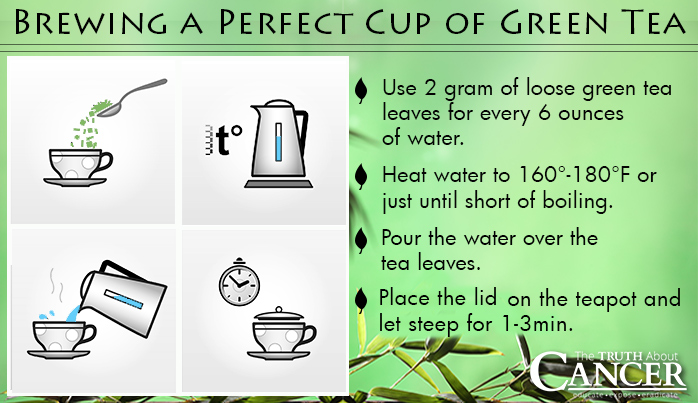
- Use 2 grams (roughly one teaspoon) of loose green tea leaves for every 6 ounces of water. Ideally, you should use organic, non-irradiated tea leaves. Whether you use tap, filtered, or spring water is up to you; however, fresh, cold water that has not been previously boiled is the best option (avoid fluoridated tap water, and pay special attention not to re-boil it, as the chemical will concentrate).
- To make the tea, place the water in a tea kettle and heat it to 160°-180°F. Alternatively, you could heat the water to just short of boiling. Place the loose leaves in a teapot or cup (you may want to add a small amount of room temperature water − enough to dampen the tea leaves or bag before adding the water). Pour the water over the tea leaves.
- Next, place the lid on the teapot. If using a cup, cover it with a lid or a small saucer. Depending on the green tea variety, steep for 1-3 minutes. Small leaves generally infuse more quickly than large leaves.
As soon as the tea is ready – and you’ll be the judge of whether it is, according to your own taste preferences – remove the leaves by lifting out the infuser or pouring the tea through a strainer. Whole green tea leaves can often be steeped 2-3 times, producing new flavors with each brew.
Now that you know how easy it is… why not go ahead and make yourself a cup (or two) of green tea and enjoy its anticancer health benefits right now?
Editor’s Note: This article was initially published in 2022 and has been updated in 2026.
Article Summary
Tea is the most popular beverage after water and has evolved to become part of the daily diet of nearly two-thirds of the world’s population.
The popularity of green tea has been growing by leaps and bounds among health-conscious people because of green tea’s ability to fight cancer.
EGCG is the most effective green tea antioxidant. It has been tested extensively over the past few years and studies clearly show that EGCG and other green tea antioxidants are toxic to cancer cells in laboratory experiments.
Because of these promising results, many human clinical trials have been carried out (and are still being carried out) to find out whether EGCG and green tea extract supplements can protect us from developing cancer.
The available evidence suggests that daily consumption of 2-3 cups of green tea can help to lower your overall cancer risk without any serious side effects.
The health benefits you get from green tea depend on the type and quality of green tea you use, how much you use, how long you brew it for, and the temperature of brewing.








Thank you thank. Congratulation on ypur steadfy reserarch I’ll be more consistant in dinking in and I’ll recommend it to some friends struggling with cancer. Love Mario
What about green teas effect on neutrophils? Many of us brewing our organic matcha tea (thanks to your ttac videos) also have low white counts caused by chemotherapy- so Im wondering if we keep drinking matcha ??
Now I am drinking soursop and green tea and it tastes very good. I have been drinking soursop tea for over a year. I should try green tea on its own to see what it is like. I have green tea available in my local grocery store in Ottawa. I should buy it.