














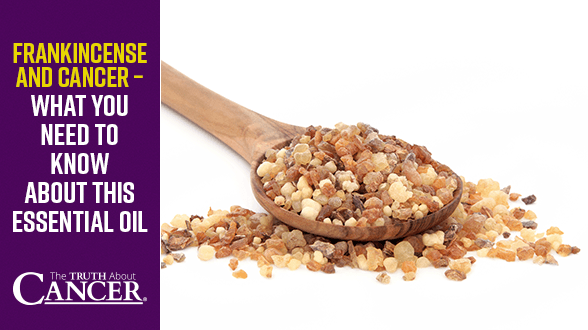
As they made their iconic trek from the Far East to witness the invaluable gift of the newborn King, the three wise men from the biblical account of Jesus’ birth brought their own gifts. One of them, frankincense, has a value far beyond a fragrant incense. It shows powerful anti-cancer effects that, even today, make this precious oil truly fit for a king.
Frankincense Essential Oil Uses
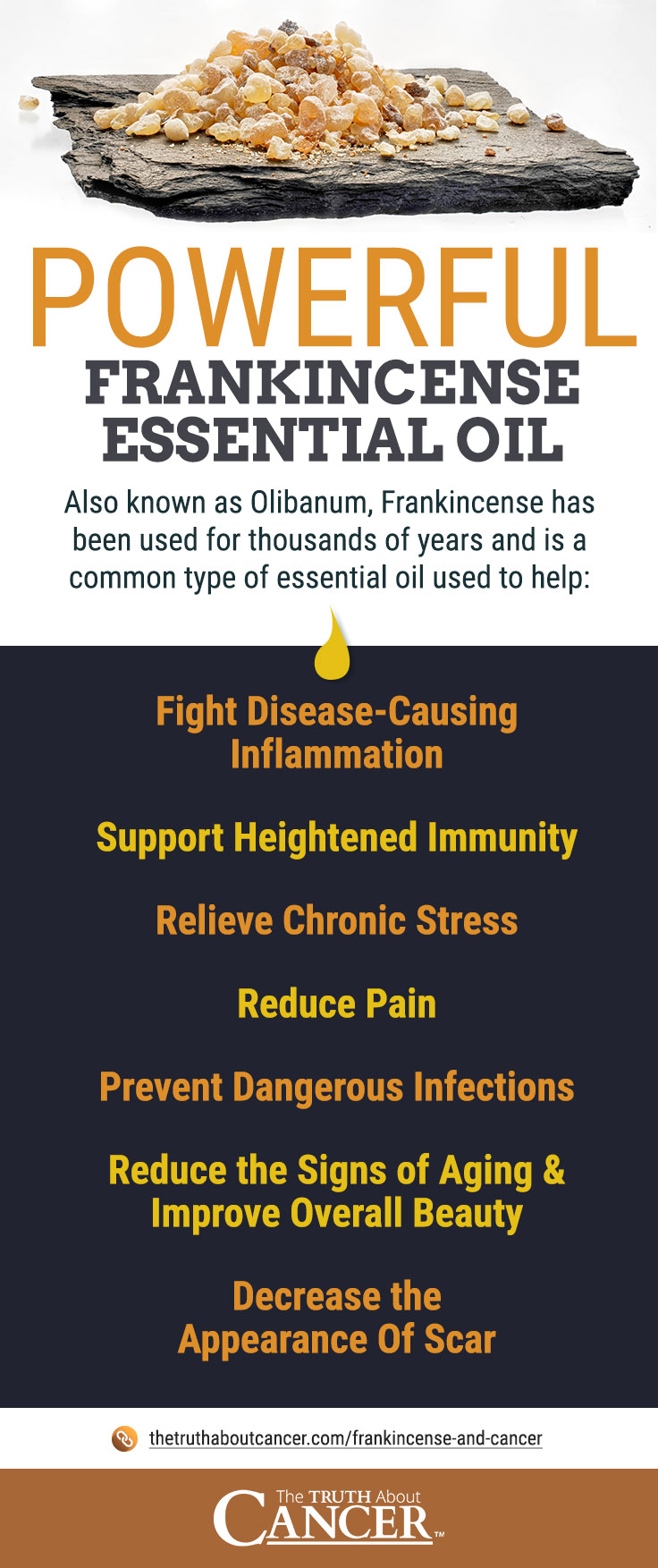
Frankincense, also known as olibanum, has been used for thousands of years and is a popular type of essential oil used to help:
-
fight disease-causing inflammation: anti-inflammatory effects in chronic inflammatory diseases
-
support heightened immunity: dose-related increase in delayed hypersensitivity and antibody titres
-
relieve chronic stress: reduced anxiety scores in patients undergoing shock wave lithotripsy
-
reduce pain: decreased daytime and nighttime pain scores in a randomized controlled trial
-
prevent dangerous infections: antimicrobial activity against S. aureus, E. coli, and C. albicans
-
reduce the signs of aging: improved photo-aged skin by reducing fine wrinkles and roughness
-
decrease the appearance of scars: accelerated burn wound repair in a rat model
But many people remain unaware of the added cancer-fighting potential of this precious serum, which researchers from the University of Leicester in the UK (among others) confirmed through rigorous scientific testing.
Also known as boswellia, frankincense contains a unique compound in its nutrient profile called acetyl-11-keto-beta-boswellic acid, or AKBA for short. Scientific research has identified AKBA as a promising anticancer agent. With funding from the government of Oman, researchers from the University of Leicester investigated how frankincense might serve as a safe and effective therapy for women with ovarian cancer—one of the leading causes of cancer in women.
Frankincense and Cancer: Frankincense Essential Oil Benefits
Even in patients with late-stage ovarian cancer, which is exceedingly difficult to treat using conventional methods, the researchers discovered that the AKBA in frankincense oil demonstrated clear efficacy. A 2019 study confirmed that AKBA decreases the malignancy of taxol-resistant human ovarian cancer by inhibiting multidrug resistance proteins.
Here’s what Kamla Al-Salmani, lead author of the paper and a PhD student at the University’s Cancer Studies and Molecular Medicine department, said about their findings in late 2013:
After a year of studying the AKBA compound with ovarian cancer cell lines in vitro, we have been able to show it is effective at killing cancer cells. Frankincense is taken by many people with no known side effects. This finding has enormous potential to be taken to a clinical trial in the future and developed into an additional treatment for ovarian cancer.
Frankincense Essential Oil and Cancer
Related research has shown that AKBA is effective against other forms of cancer as well. For breast cancer, studies demonstrate that AKBA induces significant cytotoxicity and apoptosis in breast cancer cell lines while showing less toxicity to normal cells. For colon cancer, AKBA suppresses colitis-associated colorectal cancer by inhibiting the NF-κB signaling pathway and remodeling gut microbiota. For prostate cancer, AKBA effectively suppresses chemoresistant prostate cancer cells by blocking Akt and Stat3 signaling pathways, with an IC50 value of approximately 17 μM. A broader review of anti-inflammatory and anti-cancer activities of frankincense confirms that boswellic acids inhibit the progression of multiple cancer types through various mechanisms.
This evidence suggests that frankincense isn’t just a supplemental treatment to accompany chemotherapy and radiation; in some cases it may actually be preferable as a replacement. The reason is that frankincense shows demonstrable effectiveness in areas where chemotherapy isn’t all that effective, particularly with regard to ovarian cancer. Dr. Mark Evans, who heads the program of which Al-Salmani is a student, explained that certain cancer cell lines that don’t respond to chemotherapy are notably responsive to frankincense.
Though commonly mixed with a carrier oil such as saponified coconut oil or jojoba oil and applied topically, frankincense can also be consumed orally by putting one or two drops of the oil into a beverage. Purity and quality are extremely important when using essential oils—especially if you are ingesting them. Essential oils are complex mixtures that can pose health risks at certain doses, and regulatory agencies recommend consulting a healthcare professional before use. Always be sure to consult with a qualified healthcare practitioner versed in the proper use of essential oils before undertaking such a regimen—especially for cancer-fighting purposes.
================
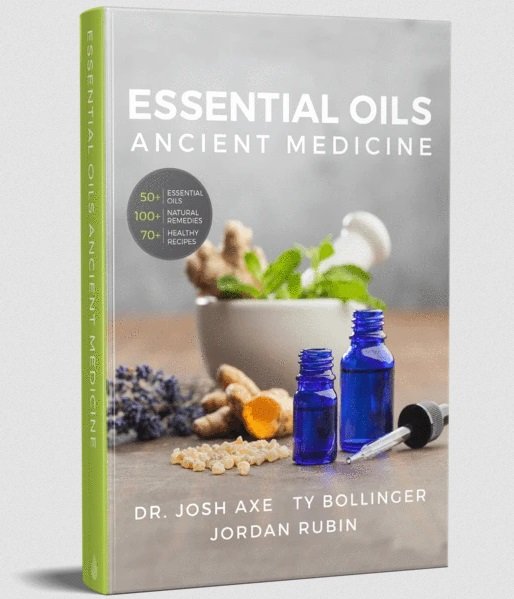
If you want the equivalent of a college-level education on essential oils, get your copy of Essential Oils: Ancient Medicine by Dr. Josh Axe, Jordan Rubin, and Ty.
In this 500+ page full-color book, you’ll get expert tips and secrets to healing with this Biblical medicine. It also includes a step-by-step guide to using more than 50 top essential oils.
Editor’s Note: This article was initially published in 2022 and has been updated in 2026.
Article Summary
You may know frankincense as being one of the gifts the three wise men brought baby Jesus, but this precious oil also has demonstrated powerful anti-cancer effects.
Frankincense (also known as olibanum), has been used for thousands of years and is a popular type of essential oil used to help:
- fight disease-causing inflammation
- support heightened immunity
- relieve chronic stress
- reduce pain
- prevent dangerous infections
- reduce the signs of aging and improve overall beauty
- decrease the appearance of scars
Researchers from the University of Leicester in the UK announced back in 2013 that frankincense may prove to be a safe and effective therapy for women who suffer from ovarian cancer.
Related research into a compound found in frankincense – AKBA – has shown is may also be effective against other forms of cancer including breast, colon, and prostate cancers.
Purity and quality is extremely important when using essential oils. Always work with a qualified healthcare practitioner before using essential oils for any health purposes.







Thank you for all you do!!
Hi Charlene ☺️, My name is Nancy and I’ve seen and admire you after listening carefully your conversation with Dan Ball. I watch his show daily. I want to say thank you so much for what you both do. For getting the truth out.
I have ordered frankincense oil a couple of years back and I actually forgot how to use it. I think I bought it for pain. But I was wondering 🤔 if I could use it on my face as a beauty treatment?
I also read the article about the use of it for ovarian cancer. I recently had a tumor removed in my right ovary however I still have one in my left ovary. The surgery was botched because of so much scar tissue from removing my colon. The punctured my bowel and I was later told I should never have my abdomen opened again, ever. How can I 🤔 find out how frankincense is used for ovarian cancer and how do they administer something like that. I am so very interested how this all works. I would ❤️ to get some kind of reply. Thank you so much.
Keep up your good work.
Any recommendation for what source of frankincense essential oil to trust? Thank you for all you do! The Truth about Cancer website and videos have been filled with life changing info!! We utilize what we are learning and share with as many as we can! You are such a blessing! Keep being His hands and feet!
I am self taught the past 15 years using many EOs. There are MANY fake and adulterated EOs and companies. I trust Plant Therapy, Rocky Mountain, Edens Garden, Eden Botanicals.
Dear All, DoTerra is a premium EO. Blessings 🙌💝
I would like to know which Frankincense,it is Serrata, Carterii, or neglecta?
Or any will be effective??
Thanks, Carrie
Great insights! Really enjoyed reading your perspective. Thanks for sharing this post.
What about reducing the size of a tumor in the breast? And if it needs to be taken internally, what brands of frankincense extract/oil do you recommend? Thank you!
It’s not ‘brands’ it’s the type of Frankincense. Look up the info by the doctor who did the research, Dr. HK Lin. He tells you the types. There is also a type that adds the oil into CBD (hemp). It’s super expensive but if it fits your budget you may want to try that. And, so you know, you can get the resin and use an organic oil and make it yourself, if that’s your jam. According to one blog post I read on the Tisserant Institute website), the active ingredient that has been studied – Boswellic Acid (spelling?) – only comes out in an extract not oils. (I haven’t yet researched to find out if that’s true but it’s worth checking Dr. Lin’s work to see what he says.)
I hope this helps.
Thank for all the info! I will check it out 🙂
Hi Twik! Thanks so much for all the info. I will check out the resources you provided. Have a great day!