














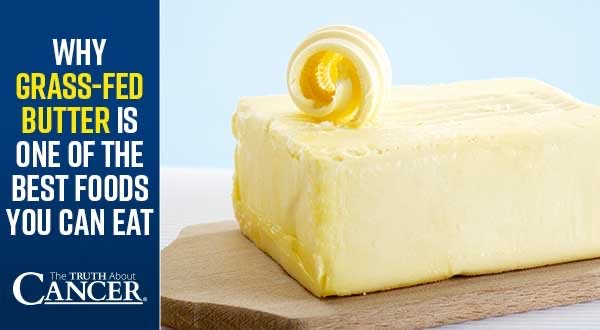
One of the best animal-based fats is butter derived from pastured, grass-fed animals. It’s rich in butyrate, a short-chain saturated fatty acid that a healthy colon also produces from dietary fiber. Grass-fed butter is an amazing health food that provides the body with nutrient-dense fats while promoting a healthy digestive tract.
Grass-fed butter is rich in fat-soluble vitamins like true vitamin A, vitamin D, vitamin K, and vitamin E, as well as all of their naturally occurring cofactors that aid absorption. These butter “catalysts” or “activators,” as Dr. Weston Price once referred to them, are what our bodies use to absorb vitamins and minerals effectively. Without them, it wouldn’t matter how many nutrients we ingested – very few of them would actually reach their intended targets. This is a critical point that modern nutrition often overlooks. You can eat all the kale, spinach, and broccoli in the world, but without the proper fat-soluble cofactors found in traditional animal fats like grass-fed butter, your body simply cannot extract and utilize the minerals those vegetables contain. This is one reason why traditional cultures always consumed animal fats alongside their plant foods – they understood instinctively what science is now confirming.
Butterfat is critical for sexual development and reproduction, as its fat-soluble vitamins support healthy endocrine function. The vitamins A, D, and K2, which are abundant in grass-fed butter, are essential for proper hormone production and balance. These nutrients support the adrenal glands, thyroid function, and the reproductive organs in both men and women. Many couples struggling with fertility are deficient in these vital fat-soluble nutrients. Traditional cultures understood that butterfat was essential for conception and healthy fetal development, which is why they considered it a sacred food for pregnant and nursing mothers.
Butter also contains what’s known as the “Wulzen Factor” or the “anti-stiffness” factor. Only present in raw animal fat, this substance protects humans and animals against joint calcification (aka degenerative arthritis), artery hardening, cataracts, and pineal gland calcification. The Wulzen Factor was discovered by Dr. Wulzen in the 1930s, who found that it prevented arthritis in animals. Unfortunately, this protective compound is destroyed by pasteurization, which is another powerful reason to seek out raw grass-fed butter when available.
Butter further contains what Dr. Price described as “Activator X” – another catalyzing nutrient that helps the body better absorb vitamins and minerals. Activator X is only present in butter derived from animals that graze a heavy diet of natural grasses. It’s not found in conventional butter derived from cows fed soy-based grain feed or cottonseed meal. Modern research has identified Activator X as vitamin K2, a nutrient that plays a key role in bone and heart health by regulating calcium levels in the body. Vitamin K2 works synergistically with vitamins A and D to direct calcium into your bones and teeth – and away from your arteries and soft tissues where it can cause calcification and disease.
Butter contains high levels of arachidonic acid (AA), a nutrient that serves as a precursor to prostaglandins. It also supports brain health and cell membrane integrity. Arachidonic acid is particularly important for brain development in infants and children, cognitive function throughout life, cellular signaling and communication, and the regulation of inflammatory responses in proper balance. This is why traditional cultures prized animal fats for growing children and pregnant women – they understood that brain development depended on these vital fatty acids.
Butter also contains a high concentration of both short- and medium-chain fatty acids (between 12-15%), which enter the liver directly from the small intestine for rapid conversion into energy. Unlike long-chain fatty acids, which must be processed through the lymphatic system, these MCTs provide immediate fuel for your body and brain. These same fatty acids possess antimicrobial, antitumoral, and immune-supportive properties, helping to protect against pathogenic bacteria in the digestive tract, fungal overgrowth (including Candida), viral infections, and certain types of tumors.
Butter is one of only two dietary sources (other than mother’s milk for babies) of an important medium-chain fatty acid known as 12-carbon lauric acid. Butterfat contains high amounts of this highly protective anti-fungal and anti-tumoral agent, as does coconut oil. Lauric acid is converted in the body into monolaurin, a compound that has been shown to destroy lipid-coated viruses (including influenza, HIV, and herpes), eliminate harmful bacteria like H. pylori, combat fungal infections, and support overall immune function. (A quick side note here: despite recent news stories that coconut is not healthy because it’s a saturated fat, in my opinion, it is the premier alternative to butter for those who don’t consume animal products. One reason is that it also contains exceptionally high levels of medium-chain triglycerides.)
Other important factors that solidify grass-fed butter’s superfood status include a near-perfect balanced ratio of omega-3 to omega-6 fatty acids – grass-fed butter provides about 26% more omega-3s than regular butter. This is crucial because the modern Western diet is heavily skewed toward inflammatory omega-6 fats, and grass-fed butter helps restore that balance. It also contains high levels of conjugated linoleic acid (CLA) – a powerful anti-cancer nutrient that promotes healthy muscle tone while inhibiting weight gain. Grass-fed butter may contain up to 500% more CLA than regular butter, and studies have shown CLA to be effective against breast, colon, and prostate cancers.
Butter also provides high levels of both lecithin and cholesterol – lecithin acting as a natural facilitator to promote optimal assimilation and metabolization of cholesterol (and other fat constituents). This means that butter helps your body use cholesterol effectively for hormone production, cell membrane integrity, and brain health. It is also rich in glycophingolipids, a type of fat that is highly protective of the GI tract, helping to protect the intestinal lining from damage, support the growth of beneficial gut bacteria, enhance nutrient absorption, and reduce inflammation in the digestive system. Finally, butter is rich in trace minerals such as manganese, zinc, chromium, iodine, and especially selenium, all of which are readily absorbed due to butter’s wide array of metabolic cofactors. Selenium, in particular, is a critical mineral for thyroid function, immune health, and protection against oxidative stress.
It’s important to understand that not all butter is created equal. Conventional butter from grain-fed cows contains significantly fewer nutrients, a poor omega-6 to omega-3 ratio (up to 10:1 compared to grass-fed’s 1:1), virtually no CLA or Activator X, possible residues of antibiotics, hormones, and pesticides, and lower levels of fat-soluble vitamins. When you buy conventional butter, you’re missing out on the very compounds that make butter a superfood. The cheap price tag simply isn’t worth the nutritional sacrifice. When shopping for grass-fed butter, look for “grass-fed” on the label (not just “natural” or “organic”), “pasture-raised” certification, deep yellow color indicating higher beta-carotene and nutrient content, raw when possible (contains Wulzen Factor), and brands like Kerrygold or local farm options.
Dr. Weston Price’s research, documented in his classic book Nutrition and Physical Degeneration, showed that traditional cultures around the world consumed diets rich in animal fats, particularly butterfat. These cultures enjoyed perfect dental alignment with virtually no cavities, robust immune systems, excellent fertility and easy childbirth, and freedom from chronic diseases that plague modern society. When these same cultures abandoned their traditional fats for modern processed oils, their health declined rapidly. Price’s research is a powerful testament to the vital importance of grass-fed animal fats like butter.
Here at the Bollinger house, we never go without grass-fed butter and coconut oil (expeller-pressed for cooking and extra-virgin for raw consumption). These are our go-to sources of saturated fat and corresponding vital nutrients, and two of the best superfoods that a human being can eat.
Editor’s Note: This article was initially published in 2021 and has been updated in 2026.








In the books
Lets Play Doctor by Dr. Ma Lan. Dr. Joel Wallach (The book tells what vitamins you are short of)
Lets Play Herbal Doctor by Dr. Ma Lan Dr. Joel Wallach
it says margarine causes age spots on the hands (been there, done that) but the good news is when you stop eating margarine the age spots go away (been there, done that)
It is interesting do you need any margarine or butter on the bread (been there, done that)
Some spreads takes a bit of getting used to like honey or jam (been there, done that) but others you can not tell the difference.
Some years ago I used to get a sandwich made and I had to ask them not to put margarine or butter on it, I got sick of it having wait something like ten minutes or more, So then I gave it up, it was quicker to go to a fruit & vegetable shop, a few months later I went to the doctor, he took my blood pressure with an automatic blood pressure device, then he quickly pulled his stethoscope out of the desk draw and listened to the sound of my heart and said “Do you know? you have the lowest blood pressure for your age group” I would of been in the early 60’s then
A few years ago the same doctor wanted to put me on drugs to lower my weight, instead I stopped eating the bread and ate more mixed vegetables (Atkins diet) I lost 10 Kg over a month, half that time I was stuck in hospital and could not do my daily walking to keep the weight down.
Just recently I got a email that gave the most common cause of cancer, the first item on the list was GE food, then it hit me, 99.9% of the bread sold in the shops is bread made with GE wheat.
Now I eat coconut bread.
No need for extremes. All you have to do is use organic AND glyphosate free flour (e.g. King Arthur) and make your own.
I would like to know if all grass fed brands of butter are equal. We’ve bought the Kerry Gold for years but had some Amish made butter at a relatives and it had more flavor making me wonder if our’s was as good nutritionally. Is there way to find out about all the brands and which might be the healthiest?
Diane
The only way to know one is getting real authentic Amish butter is to be getting it directly from an Amish farm. Otherwise, if bought in a grocery store, most always it’s FAKE Amish butter being “passed off” as Amish butter.
Butter contains palmitic acid which causes cancer to metastasize. See Dr Greger’s latest video on this.
What about Grass Fed Raw Milk?
https://returntonow.net/2018/08/17/why-youve-never-heard-of-the-mayo-clinics-raw-milk-cure/
Because of this article my husband who has a tumor and I have been drinking a couple glasses a day.
Is our faith misplaced. It Grass Fed Raw Milk good or bad?
I’d highly recommend a high-quality PARASITE CLEANSE, as “cancer,” tumors and such, are nothing but parasites.
What about IGF-1 growth hormone in dairy? Does this not promote cancer growth? I need to know, because I am battling cancer and LOVE butter.Thanks,
Speaking of healthy fatty acids, Butter contains very high amounts of Butyric Acid, which is the favorite fuel for Colon cells.
What is the brand name of butter’s, spreads, that have the best health benefits, especially for people have experience a cancer diagnosis?
What is the best grass fed butter brand?
I tend to use plant-based butter, coconut oil, and olive oil for cooking and to put on salads, pastas, rice dishes and meat and fish and avoid animal-fat butter because my family physician says that my cholesterol is very high and I have to take statins for it. I do not understand why I have high cholesterol when I eat very little meat, fish, poultry, dairy, and eggs and eat mostly a plant-based diet and I exercise regularly and I am not even overweight. I eat very little bread and almost no potato chips. I barely even fry my food. I tend to grill, bake, or just eat raw food.