















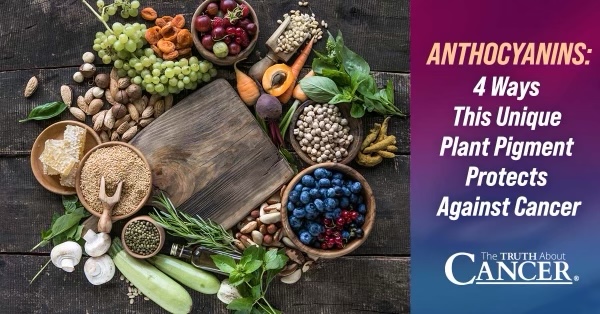
Plants develop their pigmentation (colors) in nature in order to protect themselves from harmful UV radiation from the sun and other environmental stressors. These adaptive qualities help them to survive and procreate. When we consume these compounds (known as anthocyanins), they provide powerful antioxidant protection that helps us cope with stress, radiation, and environmental toxins. These antioxidants are categorized as polyphenols, and consuming them is one of our best strategies for preventing cancer.
How Anthocyanins Help Protect You from Cancer
Skin damage is most often caused as a result of injury from free radicals. Abnormalities in cell structure not only lead to aging… they can cause cancer as well. Chronic exposure to oxidative stress in cell signaling processes promotes the formation of genetic mutations that replicate abnormally, which can lead to cancer.
Here are 4 ways anthocyanin antioxidants protect you against cancer development.
1 | Natural SPF Protection
The name anthocyanin is derived from the Greek word “cyan,” meaning dark blue. The deep blue and purple colors of anthocyanins are created at the cellular level and provide sun protection by absorbing blue-green light and UV rays in plants. These antioxidant components significantly mitigate stress in the plant and also scavenge free radicals, providing additional protective capabilities.
There are more than 600 types of naturally occurring anthocyanins. The most common form, Cyaniding-3-glucoside (C3G), has been found to directly influence gene expression. Clinical studies have shown that C3G improves the activity of protective genes and suppresses those that cause inflammation and other tumor-promoting activities.
2 |Reduce Inflammation
Various factors contribute to the chronic inflammation that afflicts most people today. Depleted antioxidants, nutrient deficiencies, increased free radical formation, low fatty acid concentrations, increased toxic accumulation, and persistent emotional, mental, physical, and neurological stress all exacerbate inflammatory damage to our cells and tissues.
Inflammation stimulates cellular activity that promotes the expression of oncogenes that drive cancer. Oncogenes drive cancer cell proliferation and are major contributors to metastasis to neighboring regions. Anthocyanins have been shown to control inflammatory conditions by activating a “cell suicide” pathway in cancer cells known as apoptosis. Apoptosis is a natural defense mechanism in the body with several purposes. Most importantly, in the case of cancer cells, apoptosis helps prevent damage within our tissues.
Tumor grade is an indicator of how quickly a tumor is likely to grow and spread. If the tumor cells are well organized, the tumor is considered “well-differentiated.” These tumors tend to grow and spread more slowly than less-organized or “undifferentiated” tumor cells. C3G has been shown to promote differentiation in certain cancers, such as melanoma.
3 | Improve Metabolic Pathways
Cancer is considered a metabolic disease that thrives on altered energy metabolism. C3G improves the metabolic pathways that regulate glucose and may limit the occurrence of altered energy forms that fuel cancer growth. The availability of anthocyanins in our diets is far greater than that of many other potent antioxidants, making them a readily accessible tool for preventing cancer. In fact, C3G extract is suggested to have potent chemotherapeutic potential against colorectal cancer. C3G has also been shown to effectively reduce free fatty acids associated with obesity and insulin resistance in type 2 diabetics.
4 | Turn on Cancer Cell Apoptosis
That the same oncogenes previously described can limit inflammation and turn on apoptotic pathways in cancer cells is perhaps one of the greatest realizations in our understanding of malignant cancers. Genetic mutations that alter these oncogenes lead to faulty signaling, which initiates rather than suppresses cancer.
Anthocyanins protect oncogenes from toxic agents that disrupt healing processes. The ability of any compound to have such a profound impact on apoptosis in abnormal cells is conclusively among the best therapeutic strategies for preventing and healing from the effects of cancer.
Natural extracts containing anthocyanins have been demonstrated to inhibit mutagenic expression of cancer related to the colon and rectum, prostate, and esophagus.
A Summary of Anthocyanin Characteristics:
- Create pigmentation in dark colored fruits and vegetables
- Natural SPF protectant for both plants and our skin
- Scavenge free radicals
- Reduce inflammatory markers
- Suppress cytokine activity
- Trigger activity in cells and genes that protect against inflammation and shut off the communication signals that promote expression of oncogenes
- Promote normal cell differentiation of certain cancers
- Increase apoptosis in cancer cells
Equipping the body with these antioxidants is critical to combating the constant influx of toxins and harmful processes that age and damage the human body. Foods containing anthocyanins have been traditionally used in herbal medicine to treat infections, liver disorders, high blood pressure, and even the common cold. The ability of anthocyanins to improve blood circulation is one possible reason for their anti-inflammatory and anti-carcinogenic effects.
What Foods Contain Anthocyanins?
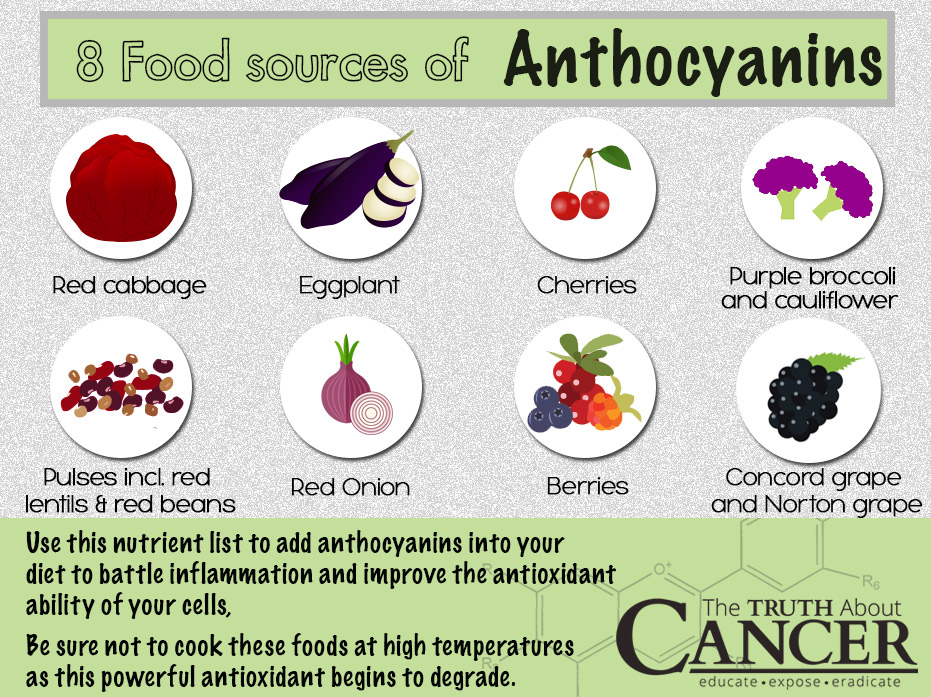
Adding a variety of natural colors to your diet can not only help you battle inflammation and improve the antioxidant ability of your cells, but it will also significantly impact your body’s ability to prevent cancer. Use this nutrient list to increase your anthocyanin intake. Be sure not to cook these foods at high temperatures, as this powerful antioxidant begins to degrade.
- Cherries
- Purple cauliflower, red cabbage, and purple broccoli
- Red onion
- Eggplant
- Pulses, including red lentils and red beans
- Berries including wild blueberries, black raspberries, marion blackberries, black currants, acai, red currants, strawberries, goji berries, and aronia (also known as chokeberries)
- Grapes such as the common concord grape and Norton grape
- Sweet potato
Incorporating Anthocyanins into Your Diet
There are a variety of ways you can add anthocyanins to your diet. You can start your day by preparing a mix of your favorite berries to enjoy with your breakfast. Red cabbage is an excellent addition to sauerkraut or can be juiced. Try sautéing or steaming red cabbage, purple cauliflower, purple broccoli, and purple (non-GMO) corn with grass-fed butter and herbs for amazing cancer preventative benefits.
Adding blueberries, blackberries, and raspberries to your smoothies each day is an easy and tasty way to increase your anthocyanin intake. Bilberries, commonly found as dried fruit, in an extracted powder, or in supplemental form, also exhibit anti-mutagenic potential.
Research on the benefits of anthocyanins is promising for anti-cancer therapies because, even without year-round access to fresh berries, dried forms can be just as effective as a cancer-prevention tool. Patients with colorectal cancer particularly benefit from berry consumption.
Editor’s Note: This article was initially published in 2022 and has been updated in 2026.
Article Summary
Plants develop their pigmentation (colors) in nature in order to protect themselves from harmful UV radiation from the sun and other environmental stressors.
When we consume these compounds (known an anthocyanins), they give us powerful antioxidant protection and are one of our best strategies for preventing cancer.
Here are 4 ways anthocyanin antioxidants protect you against developing cancer:
- Natural SPF Protection
- Reduce Inflammation
- Improve Metabolic Pathways
- Turn On Cancer Cell Apoptosis (cell suicide)
Equipping the body with these antioxidants is critical to combating the constant flow of toxins and hazardous activity that ages and damages the human body.
Foods containing anthocyanins have been traditionally used in herbal medicine to treat infections, liver disorders, high blood pressure, as well as the common cold.
Here are some foods that are good sources of anthocyanins. Do not overcook them as it will cause the antioxidants to degrade.
- Cherries
- Purple cauliflower, red cabbage, and purple broccoli
- Red onion
- Eggplant
- Pulses including red lentils and red beans
- Berries including wild blueberries, black raspberries, marion blackberries, black currants, acai, red currants, strawberries, goji berries, and aronia (also known as chokeberries)
- Grapes such the common concord grape and Norton grape
- Sweet potato







My husband has cancer and he is 88 yrs of age. It is prostate cancer and he is seemingly in his last stage. He has lost weight. I wish there was a cure.
Love love love your article summaries and your awesome research articles!
Thank you for sharing your work and thoughts 😊♥️🙏
Thank you for this article. Most of it is very useful.
However, having spent almost my entire life in the research and application of alternative cancer methods, I feel that there are two things I need to point out:
1) In the third sentence of your article, you say: “These powerful antioxidants (a type of polyphenol) fight oxidative stress, neutralize free radicals, and protect your cells from the kind of genetic damage that leads to cancer.”
I must take issue with a crucial part of that statement: You are essentially saying that genetic damage leads to cancer. The entire profession of conventional oncology, including research, will happily go along with that. There is only one problem: It is NOT true. That statement is based on the idea that cancer is caused by genetic damage. That theory is often referred to as the “Somatic Model of Cancer.” The insistence on that model by the conventional oncology profession is the biggest single reason why the profession has made so little progress and why the outcomes for most cancers have not significantly improved in all the decades of money and effort. The somatic model is simply wrong. It has been scientifically disproven many times. Dr. Otto Warburg, MD and researcher won the Nobel Prize in Medicine for his “Metabolic Model of Cancer” clear back in 1931. His model has been proven many times and has never been disproven. Further, those practitioners who employ it routinely achieve outcomes for their patients that are vastly superior to those following the Somatic Model.
It is true that there is genetic damage commonly found in cancer cells, but the crucial distinction is that the genetic damage is the Result of the cancer, and NOT the cause. Again, Dr. Warburg proved this nearly 100 years ago, and no one has ever been able to refute it. (Believe me, the chemotherapy makers have tried.)
2) The recommendation to eat those foods needs to be tempered with a bit of caution if one is dealing with cancer. That is precisely because cancer is a metabolic disease and sugar is its main fuel. (The only fuels that most cancer cells can consume are sugar in nearly any form at all, glutamine (a common amino acid in the human body), and the biochemical byproducts of excess inflammation. So, in most cases, limited amounts of those foods that are the lowest in “glycemic load”, are safe to eat when dealing with cancer. But only in limited quantities. For example, occasional small servings of blueberries or blackberries is OK. Grapes absolutely are not. In general, look up the Glycemic Load of foods you may be considering and stick with the lowest ones possible. Otherwise, you are feeding the cancer!
I hope this clarification is helpful.
The statement above that grapes are not good to eat for cancer because they have a high glycemic load flies in the face of people who have cured their cancers using grapes alone such as in the book “The Grape Cure.” I took an extra large drink of concord grape juice for one month every morning, among other things like eating lots of mushrooms and veggies the rest of the day and some supplements and drinking a Budwig shake, to battle stage 4 breast cancer, called “incurable” by my oncologist. One month of doing this, the tumors were gone! I tell people that the sugar in grapes is really just a Trojan Horse to lure that cancer in, and then the good stuff in the grapes (resveratrol and others) does the work!