















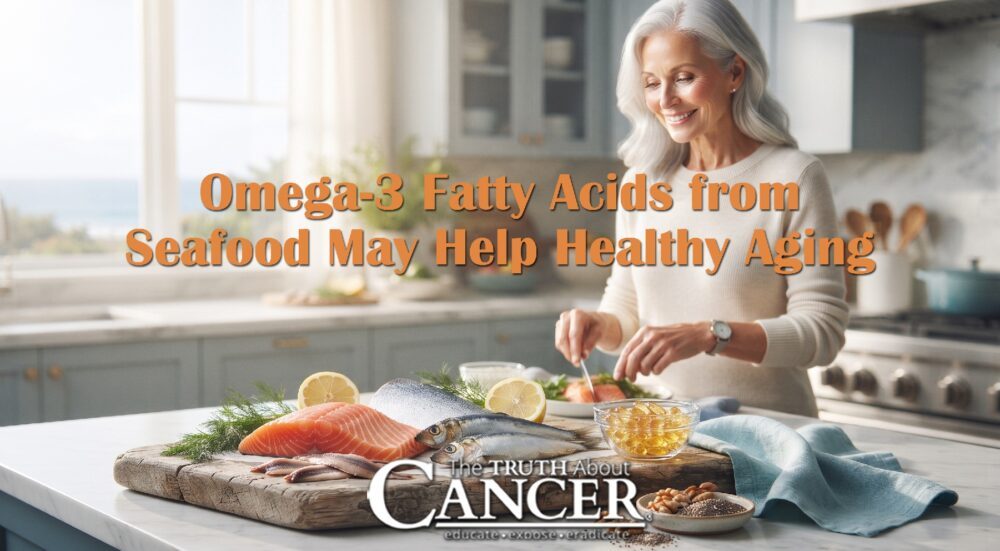
According to a study published in The BMJ, higher levels of the omega-3 fatty acids found in fish may increase your chances of healthy aging. Although people in our society are living longer, the way they age has become a concern. Researchers have begun to examine how to live a more meaningful life, free from chronic disease and mental or physical disability.
🧬 The Science Behind Omega-3s
Omega-3 fatty acids are healthy fats and have been shown to protect the brain, heart, and cardiovascular system. Researchers looked at four types of omega-3s: eicosapentaenoic acid (EPA), docosahexaenoic acid (DHA), and docosapentaenoic acid (DPA), found in seafood, and alpha-linolenic acid (ALA), found in plants. Fatty acids derived from seafood are known as long-chain omega-3s.
Those with the highest EPA levels showed a 24% lower risk of unhealthy aging, while those with the highest DPA levels had an 18-21% lower risk. DHA from seafood and ALA from plants were not associated with healthy aging.
While the study does not prove causation, the association between our diet and our long-term health is important. Heidi Lai, a postdoctoral fellow at the Friedman School of Nutrition Science and Policy at Tufts University and lead researcher on the study, concluded:
These findings encourage the need for further investigations into plausible biological mechanisms and interventions related to [omega-3 fatty acids] for the maintenance of healthy aging, and to support guidelines for increased dietary consumption of fish in older adults.”
The research is accompanied by an editorial by Professor Yeyi Zhu of the Kaiser Permanente Northern California Division of Research in Oakland, CA, who stresses the importance of researching healthy aging as opposed to longevity alone. “We live in challenging times, when lifespans are increasing but healthy lifespans are not. Following the World Health Organization’s policy framework for healthy aging, any evidence-based clues to improve health in later life are welcome, but additional efforts to accelerate this area of research are essential.”
Of more than 2,600 subjects studied between 1992 and 2005, only 11% experienced healthy aging. At TTAC, we place an enormous emphasis on nutrition. Food fuels our bodies, and the choices we make can drastically affect our overall health. Beyond cardiovascular health, omega-3 fatty acids have been shown to reduce anxiety and depression, fight inflammation, and may even help prevent certain cancers.
The authors acknowledge that the preventative health benefits may explain the correlation with healthy aging. They mention its ability to help regulate inflammation and blood pressure, both major factors in chronic disease. In fact, heart disease and cancer have been the top two causes of death for nearly a century. And there may be a correlation; people who practice healthy heart habits are 38% less likely to develop cancer. According to Lai:
In our study we found that adults with higher blood levels of omega-3s from seafood were more likely to live longer and healthier lives. So, it is a great idea to eat more fish.”
Proper nutrition can promote or prevent disease. Seafood is a well-established source of long-chain omega-3 fatty acids and has been linked to a lower risk of brain tumors. Top sources include wild-caught salmon, sardines, anchovies, and shellfish.
🔬 What Recent Research Reveals
Recent research has further strengthened the case for omega-3s. A 2025 review published in Nutrients confirmed that omega-3 fatty acids help reduce triglyceride levels, delay the onset of neurodegenerative disorders such as Alzheimer’s and Parkinson’s diseases, prevent depression, support infant brain development, modulate inflammatory processes, and contribute to cancer prevention. The review also emphasized the importance of maintaining a balanced omega-6-to-omega-3 ratio, ideally between 4:1 and 1:1.
A 2023 meta-analysis in the American Journal of Clinical Nutrition found that long-term users of omega-3 supplements exhibited a 64% reduced risk of Alzheimer’s disease. After analyzing 48 longitudinal studies involving over 103,000 participants, researchers concluded that dietary intake of omega-3s could lower risk of all-cause dementia or cognitive decline by approximately 20%, with each additional 0.1 g/day of DHA or EPA associated with an 8-9.9% lower risk of cognitive decline.
Most recently, a 2025 study from the DIAPELH cohort reinforced that dietary omega-3 polyunsaturated fatty acids from fish are associated with better healthy aging indicators, supporting the original findings that inspired this article.
🌍 Global Guidelines & How to Get More Omega-3s
Global dietary guidelines consistently recommend adequate omega-3 intake for optimal health. According to a 2025 review of international recommendations, the most frequently recommended intake for adults is 250 mg/day of combined EPA and DHA, with an additional 100-200 mg/day of DHA during pregnancy. Unfortunately, most countries show that omega-3 intakes fall short of recommended targets, highlighting the importance of accessible sources like fatty fish and quality supplements.
The evidence continues to mount: omega-3 fatty acids from seafood remain one of the most well-supported nutritional strategies for promoting not just a longer life, but a healthier one.
Editor’s Note: This article was initially published in 2018 and has been updated in 2026.








Dear Ty and Charlene. Your hard work to teach people how to heal themselves naturally is very appreciated. It is giving my husband, myself and our family great hope. My husband has stage 4 prostate cancer. About 3 weeks ago he doctor sent him home to die. He said there is nothing more he can do. He said he is sorry and gave me a hug. My husband was in constant pain because the cancer has metastasized to his bones. About a week ago I started him on a very healthy diet. Not a grain of sugar. Raw vegetable smoothies with some fruit in it. Some cooked vegetables, healthy fats and some whole grains. Within the last 3 days his pain stopped completely. He stopped all medications like oxicodone and
Tylenol. Is there anything I can add to his healing process. He still doesn’t have much of an appetite and s still very weak. But can walk with a walker short distances. Before he was completely bedridden. His physical therapist couldn’t get over how much he improved in just one week. She kept saying it over and over. I do hope u get and read this message. Maybe u can tell me what i’m still missing. Also, can he have fruit coffee?
Also want to say God Bless you.
A doctor who trained health practitioners all over the country told me there are only three causes of prostate cancer: yeast, virus and lubrication ( meaning lack of essential fatty acids, see the article above.) Your husband can do his own saliva test to check about yeast (meaning Candida, instructions can be found online.) Given this information, lots of potent probiotics along with the herb Cat’s Claw can sometimes work wonders. Start slowly with the Cat’s Claw, however, as you don’t want to stimulate a kill rate that’s too high. It often takes 3 months to clear out the Candida, and correcting leaky gut is essential, since Candida is a normal part of gut flora, and can leak through to the rest of the body.
Try Urine Therapy…Dr. Edward Group, DC ..Look up for Urine Therapy Summit,
Eating fish which are high in Omega-3s might help lower the risk of cancer and heart disease, but does not prevent it. Many fish are also exposed to pollutants which are very bad for our health.