














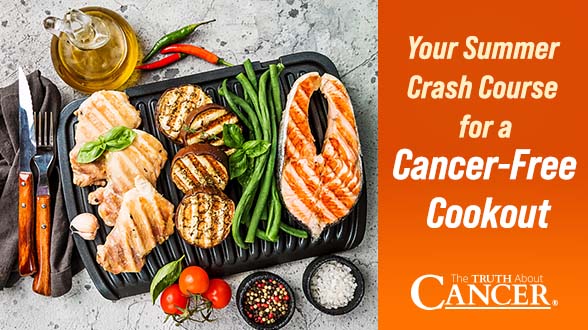
Summer is beginning, and folks all over the nation are firing up their grills. And while inviting friends and family over for a barbecue is an American pastime, there may be hidden dangers in our favorite foods. Not only is the food we choose important, but so is the way we prepare it.
In fact, the American Institute for Cancer Research (AICR) recently released a warning that grilled foods can increase the production of cancer-causing chemicals. They even included some guidelines to help ensure that your next cookout is cancer-free. According to the AICR’s Senior Director of Nutrition Programs:
Research shows that diets high in red and processed meat increase the risk for colon cancer. And grilling meat, red or white, at high temperatures forms potent cancer-causing substances. But by keeping five simple steps in mind, it is possible to make this summer’s backyard grilling both healthier and more flavorful.”
We’ve talked before about the importance of organic food, the cancer risks of processed meats, and even the potential harm caused by grilling your food. However, we know that mankind has been cooking over an open flame for thousands of years. And frankly, a summer party just isn’t the same without the sounds and smells of the grill.
To go along with the AICR’s guidelines, we want to make sure you have the knowledge you need to make sure your next shindig is healthy and cancer-free. So, without further ado, here are the important things to keep in mind the next time you grill. Check out this article for a more in-depth look at the way grilling creates toxic chemicals.
✅The Truth About Grilling, PAHs, and HCAs ❌
The science behind the grilling-cancer connection centers on a class of chemicals called heterocyclic amines (HCAs). These toxic chemicals are created when grilling meat, fish, and poultry (though they are much more abundant in meat). Studies have found that exposure to HCAs may increase the risk of cancer in humans.
Another type of chemical created when we grill is polycyclic aromatic hydrocarbons, or PAHs. PAHs can also lead to cancer and are especially prevalent when meat is smoked. According to the National Cancer Institute:
PAHs are formed when fat and juices from meat grilled directly over a heated surface or open fire drip onto the surface or fire, causing flames and smoke. The smoke contains PAHs that then adhere to the surface of the meat.”
These chemicals, especially in abundance, are a big part of why grilled meat is getting such a bad rap, but many factors are at play here. Fats and sugars, hormones and chemicals, and other types of foods we eat are equally important. So, let’s talk about the best foods to eat, where to get them, and how to prepare them.
🍔 The Foods We Eat Matter 🥦
At a backyard BBQ, burgers and hot dogs usually steal the spotlight, with steaks, chicken, and pork playing supporting roles. But here’s the not-so-savory truth: all that red and processed meat may not be doing your health any favors. One study found that processed meats—think hot dogs and sausages—increased the chance of developing breast cancer by 9%, while unprocessed red meat (factory farmed) still raised the risk by 6%. That might not sound like a lot, but when it comes to cancer prevention, every percentage point counts.
In fact, the World Health Organization has classified processed meats as carcinogenic. Now, let’s keep things in perspective: the cancer risk from eating a charred, smoky hot dog isn’t quite as serious as the dangers of a sugar-heavy diet or a completely sedentary lifestyle. Still, why take unnecessary risks when you have so many delicious, protective options at your fingertips? Swapping out hot dogs for grilled fish or poultry is a fantastic first step. Better yet, load up your plate with colorful vegetables—unlike meat, veggies don’t create those harmful HCAs when grilled. And here’s the really good news: many plant foods, including garlic, broccoli, and artichokes, have been shown to actually help prevent and even reverse cancer growth.
🔍 Where Does Your Food Come From❓
The origin of our food is just as important as our diet. At TTAC, we’ve been writing about the importance of organic, non-GMO, whole foods for years. And the truth is that not all foods are created equal! When you go to the grocery store to pick up your fish, veggies, meats, and snacks, what you buy can make all the difference in preventing cancer.
We’ve covered a lot of these things already, so here’s a list of things to look for (follow the links for more info):
1 | Understand your meat labels.
Knowing the difference between “organic,” “grass-fed,” and “grain-fed” is essential to buying healthy meat. Much of the world’s livestock is being pumped full of hormones and antibiotics and being fed grains or grass soaked in toxic chemicals like glyphosate. Always buy local, organic beef and poultry for your family.
2 | Beware of false advertising.
The current system for labeling GMOs is completely insufficient, allowing giant corporations to market their food as “organic” or “non-GMO” when it isn’t. Some farms that are certified as organic by the USDA have been caught lying about their practices, making it even harder to find healthy, real food. It’s always best to grow your own produce or find a trusted, local farm.
3 | Make sure you’re buying REAL food.
Much of today’s agriculture relies on genetic engineering to help food grow faster, bigger, and brighter than it can naturally. But with these alterations come many problems. These foods lack much of the nutrition of their natural counterpart, and create harmful, cancer-causing toxins. If it’s made in a lab, don’t eat it.
🍽️5 Steps for Preparing Food Safely 🔪
The AICR listed a few great tips for safe food preparation this summer, and we’ve added a few of our own.
1 | Marinate!
The first is to marinate your food. Studies have found that marinating for at least 30 minutes can reduce the formation of HCAs. Vinegar, lemon juice, and oils may be the most powerful way to reduce the cancer-causing chemicals found on the grill.
2 | Pre-cook
The next tip is to pre-cook. As we mentioned earlier, PAHs are especially abundant when food is smoked. You can reduce smoke exposure by pre-cooking your meat, fish, and poultry before you throw it on the grill. This is especially helpful because (in addition to reducing your cancer risk) it will keep things moving smoothly at your next soiree. No one wants to be stuck cooking all day, so do yourself a favor and get a head start.
3 | Keep it Low
Another way to keep cancer away from your cookout is by using low heat. HCA and PAH levels increase at high heat, especially when food is charred. Instead of setting your flames on full blast, try using a lower heat setting to protect your food, friends, and family. This will be no problem if you’ve precooked your meat.
4 | Ditch the Junk
The ingredients you use are important. A diet high in sugar and carbohydrates is directly linked to cancer. Look for alternatives to standards like burger buns, potato chips, and soda pop. Wow your friends with out-of-the-box replacements like matcha green tea with stevia, fresh, organic lettuce wraps, or homemade potato chips.
5 | Ferment!
Fermented foods can help fight cancer and inflammation. Additionally, they help aid in digestion and bolster the immune system. Sauerkraut and kimchi are great additions to any BBQ, and homemade kombucha is sure to be a hit on those hot summer days.
If you want more inspiration for your cancer-fighting cookout, check out these awesome recipes!
Editor’s Note: This article was initially published in 2022 and has been updated in 2026.
Article Summary
The American Institute for Cancer Research (AICR) released a warning that grilled foods can increase the production of cancerous chemicals.
The grilling-cancer connection generally refers to a chemical called heterocyclic amines, or HCAs.
These toxic chemicals are created when grilling meat, fish, and poultry.
Studies have found that exposure to HCAs may increase the risk of cancer in humans.
A study published last year found that processed meats (like hot dogs and sausages) increased the chance of developing breast cancer by 9%.
When purchasing food, here are 3 things to look out for:
- Understand your meat labels.
- Beware of false advertising.
- Make sure you’re buying REAL food.
5 Steps for Preparing Food Safely:
- Marinate
- Pre-Cook
- Keep it low
- Ditch the junk
- Ferment







I try to eat very little red meat and I do not use the grill very much. When I had the grill on high and realised that my meat and fish were charred, I put it on low. I always make homemade potato chips and I fry them in coconut oil. I try to eat the least meat possible. I do not even buy potato chips because it consists of too much salt.